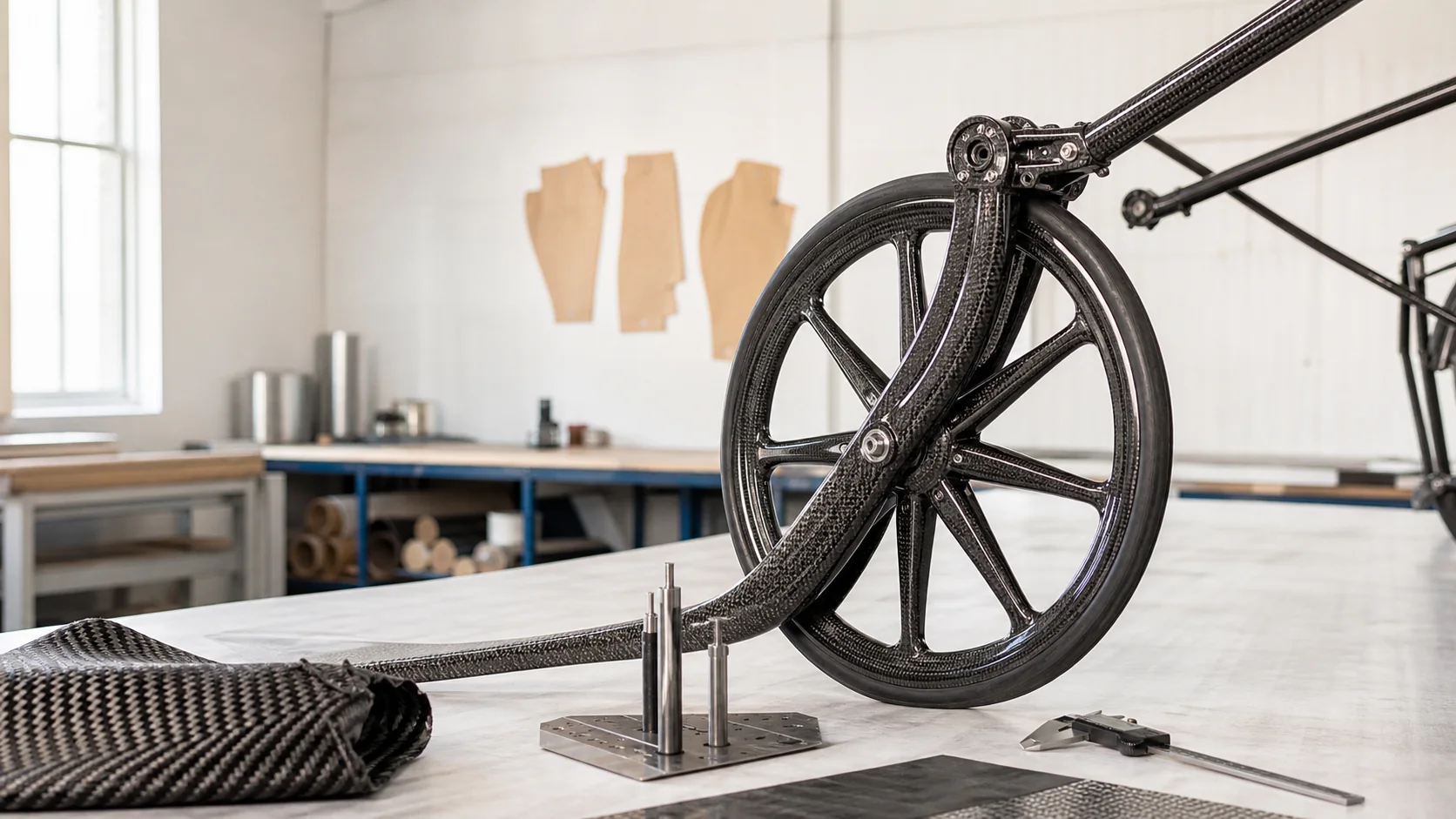
Custom Carbon-Fiber Racing Sulky for an Australian Team
Project Summary
This project involved a bespoke carbon-fiber sporting assembly rather than an off-the-shelf item. XYX helped turn the buyer’s drawings and performance priorities into a comparable supplier brief, coordinated prototype feedback, and kept production and shipping information on one bilingual record. Engineering approval and safe use remained with the client and its appointed technical specialists.
Presented at a high level to protect commercial confidentiality. Names and sensitive terms are omitted; page imagery is illustrative rather than documentary evidence.
Client
Australian sporting-equipment buyer; identity withheld for commercial confidentiality.
Timeline
Phased project; timing depended on prototype approval, inspection scope, and freight availability.
CAD
Client drawing baseline
QC
Inspection points defined
Challenge
A custom specification
Suppliers needed the same drawing pack, use case, finish requirements, and exclusions before their responses could be compared fairly.
Prototype interpretation
Visual similarity alone was not enough; the buyer needed dimensions, construction assumptions, and review comments recorded.
Inspection ownership
The project had to distinguish factory evidence, independent inspection, and the client engineer’s final acceptance.
Safe shipment handover
Packaging, dimensions, commercial documents, and freight-provider responsibilities had to be confirmed before collection.
Solution
The work was structured as a small OEM coordination project with defined approval gates rather than a simple factory introduction.
- 1
Normalise the brief
XYX consolidated drawings, intended use, finish, target quantity, and open questions into one bilingual supplier brief.
- 2
Compare candidate responses
Available company information, production approach, quotation basis, stated lead time, and sample conditions were compared on the same worksheet.
- 3
Coordinate prototype review
Prototype comments and requested changes were recorded, with technical acceptance reserved for the buyer and its engineer.
- 4
Document production and handover
Agreed production checkpoints and available shipping information were organised for the client’s nominated inspection and freight providers.
Project Outputs
Brief
Specification baseline
One bilingual source of truth for supplier comparison.
Options
Supplier comparison
Commercial and manufacturing responses recorded in a consistent format.
Gates
Prototype review
Client comments and approval responsibilities were kept explicit.
Docs
Freight handover
Available production and shipment records were organised for handover.
Key Takeaways
- Insight 1
A common brief makes supplier comparison more useful than a collection of unrelated quotations.
- Insight 2
Prototype approval should name who accepts engineering risk and which evidence they require.
- Insight 3
Inspection and freight handover work best when responsibilities are agreed before production finishes.
Related service
China Sourcing & OEM
Supplier research, sample coordination, inspection handover, and bilingual project records.
Ready to Start?
Share the product, market or trade requirement. We will review it and respond with practical next steps.